

In the substantial landscape of industrial measurement modern technology, ultrasonic liquid level sensors have actually arised as dependable remedies for accurately assessing the levels of various liquids. By correlating this pressure distinction with level measurements, they can successfully compute liquid levels in vessels and tanks, making them essential in sectors such as oil and gas, water treatment, and food handling.
Together with ultrasonic sensors and DP transmitters, inline water flow meters are crucial components in monitoring the flow rates of fluids within industrial applications. These devices gauge the volume or mass of liquid flowing via a pipeline and offer real-time data essential for process optimization and resource monitoring. Magnetic water flow meters are particularly notable for their non-invasive measurement mechanisms. They make use of electro-magnetic principles to measure the flow price of conductive fluids, providing a high level of precision and dependability. The torque transducer is another important instrument made use of in numerous industrial applications. These devices determine the torque related to a turning shaft, supplying important information for understanding mechanical performance in motors, engines, and other equipment.
They transform pressure measurements into an electric signal, which can be analyzed and processed by control systems. The convenience of pressure transducers enables their application in varied settings, from manufacturing to ecological control. Furthermore, clamp-on flow meters offer an unique non-invasive option for gauging flow rates.
Discover industrial pressure transducers the advancement of industrial measurement innovations, from ultrasonic liquid level sensors to sophisticated flow meters, and uncover just how these advancements enhance efficiency and dependability throughout various markets.
These sensors are developed to endure elevated temperatures while giving accurate pressure readings, making them essential in markets such as petrochemicals and power generation. These devices are immersed in the liquid being determined, giving constant level analyses based on the hydrostatic pressure produced by the liquid column over the sensor. Guided radar level transmitters, on the various other hand, utilize radar innovation to gauge degrees in tough problems, such as those with vapor or foam.
Turbine type flow meters are a reputable innovation for measuring fluid flow rates, especially in tidy liquids. As sectors continue to advance, so do the types of pressure sensors used for numerous applications.
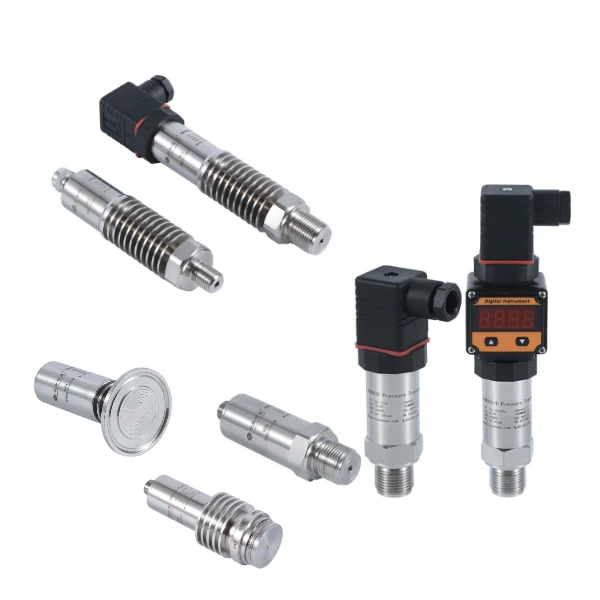
Vacuum pressure transducers, as the name recommends, are used for gauging low-pressure settings, often below air pressure. They are important in procedures requiring vacuum problems, such as in food packaging, clinical tool manufacturing, and semiconductor fabrication. At the same time, absolute pressure transducers give measurements concerning a best vacuum, supplying a clear reference point for pressure readings. These devices are consistently used in markets where precision is extremely important. Similarly, rotary torque sensors are crucial for evaluating the torque in turning devices, making it possible for designers to monitor efficiency and prevent mechanical failures in electric motors and revolving equipment.
Whether utilizing a typical flow meter or more advanced modern technology like clamp-on ultrasonic flow meters, selecting the right type of flow measurement tool can significantly influence operational performance. Industries dealing with corrosive liquids may choose for magnetic flow transmitters as they are created without moving components, therefore decreasing wear and tear.
Types of pressure transmitters also differ extensively in terms of technology and application. These transmitters can consist of yet are not limited to, basic pressure transmitters, differential pressure transmitters, and level transmitters. Each type offers unique performances, offering designers the adaptability needed to layout efficient and reliable systems for monitoring and regulating processes. For instance, DP level transmitters combined with pressure measurement can precisely account for adjustments in liquid density, guaranteeing that level monitoring remains trusted even in varying problems.
Rotameters are classic flow measurement devices understood for their simplicity and performance. The elevation of the float shows the flow rate on a scale located along with the tube, supplying visual responses that drivers can quickly translate.
Check out the evolution of industrial measurement technologies, from ultrasonic liquid level sensors to advanced flow meters, and uncover how these innovations enhance efficiency and integrity across different sectors.
The diesel fuel tank level monitoring system is an essential facet of fuel administration in various sectors, particularly in transport and power fields. These systems normally use a mix of level sensors and flow meters to provide real-time information on fuel degrees, consumption rates, and also leakage detection.
For any individual wanting to source high-quality flow measurement devices, finding a reputable flow meter supplier is important. These distributors not just supply the equipment however also supply installation, maintenance, and technological support to ensure systems operate successfully. Additionally, flowmeter distributors act as intermediaries, aiding services accessibility a broader series of products from different makers. Buying credible makers of pressure transmitters and flow meters aids ensure that the picked devices fulfill the extensive requirements needed for industrial integrity.
Finally, the world of industrial measurement is abundant with ingenious technologies designed to meet the needs of diverse applications. From ultrasonic liquid level sensors and differential pressure transmitters to magnetic flow meters and high-temperature pressure sensors, the expanding repertoire of services addresses details functional difficulties. As markets continue to development, the demand for accurate, dependable, and effective measurement technologies will only grow. By staying educated concerning the most recent developments and advancements in the field, organizations can take advantage of these modern technologies to boost operational efficiency, boost safety and security, and drive lasting techniques. Eventually, the assimilation of modern-day measurement devices into daily processes holds the essential to maximizing performance and attaining long-lasting success in a progressively competitive industry.

Leave a Reply